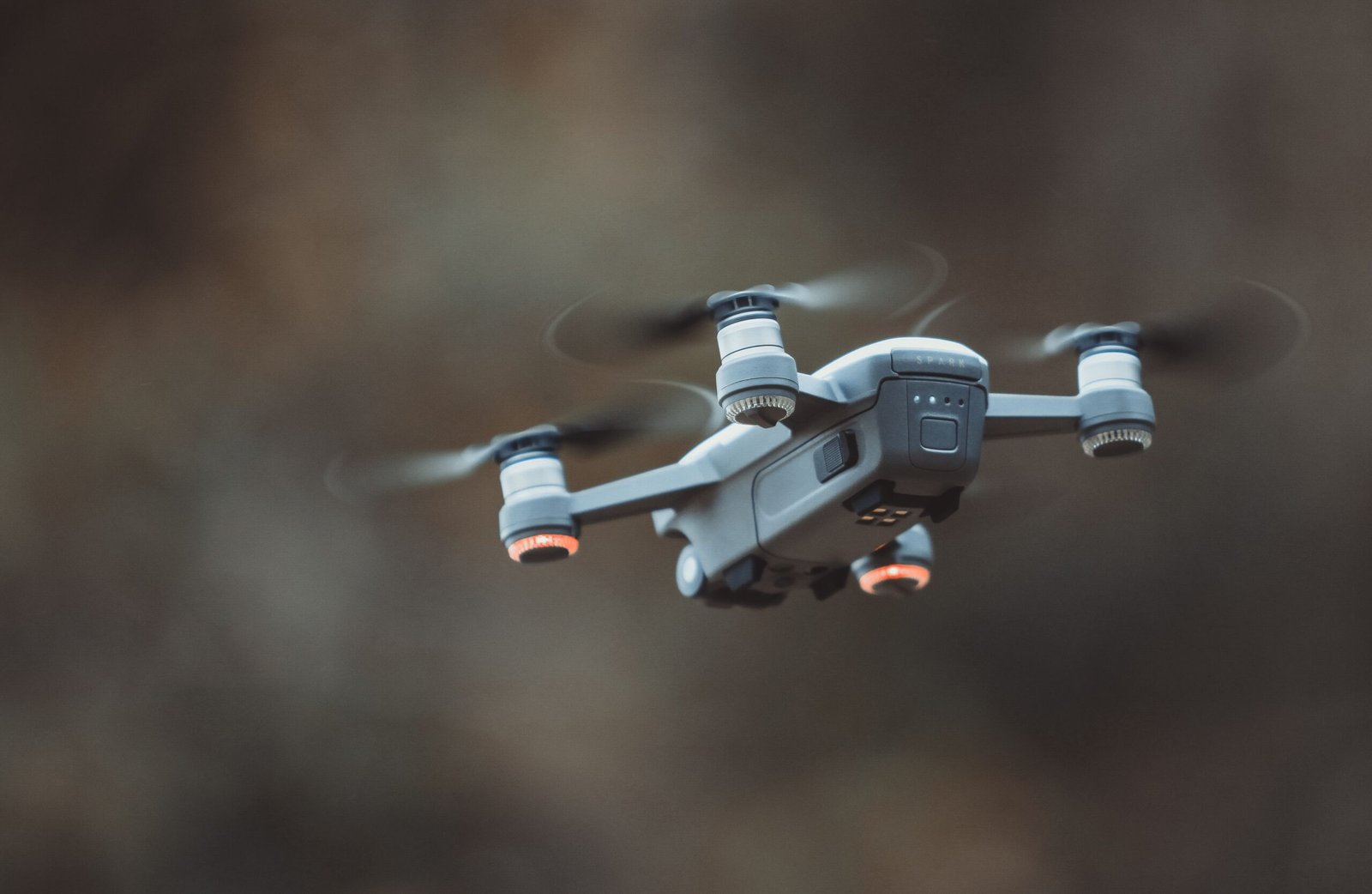
ENGINEERING BREAKDOWN: Researchers at Northwestern University have demonstrated “Phantom Twist,” an autonomous single-propeller drone that achieves optical low-visibility without stealth coatings or transparent polymers. By spinning around its central axis at 25 rotations per second (1,500 RPM), the aircraft exploits human visual persistence thresholds to dissolve into a semi-transparent blur.
🔬 THE PHYSICS OF PERSISTENCE-BASED STEALTH
1. Human Visual System Exploitation
The human eye processes sharp motion details up to approximately 10–15 Hz. By exceeding 25 Hz in continuous angular rotation, the individual mechanical components of the airframe smear across the viewer’s field of vision, appearing as a semi-transparent background smudge.
2. Inverse Single-Rotor Architecture
Unlike standard quadcopters utilizing four independent motors, Phantom Twist features a single motor and propeller assembly. As the single rotor spins in one direction, counter-torque forces cause the entire fuselage—including batteries, sensors, and flight controllers—to spin in the opposite direction at extreme velocity.
3. Algorithmic Flight Stabilization
Operating a high-speed rotating mass requires AI optimization algorithms to recalculate control surfaces hundreds of times per second, maintaining altitude and directional vectoring during rapid rotation.
📊 ROTATIONAL STEALTH SPECIFICATIONS
| Architectural Metric | Performance Benchmark | Operational Mechanism | Key Application Area |
| Rotational Velocity | 25 Hz (1,500 RPM) | Counter-Torque Fuselage Spin | Wildlife Monitoring & Surveying |
| Optical Visibility | Semi-Transparent Blur | Motion-Blur Human Eye Limit | Low-Impact Environmental Recon |
To review official robotic standards and computational engineering research, inspect the publications on the IEEE Spectrum.