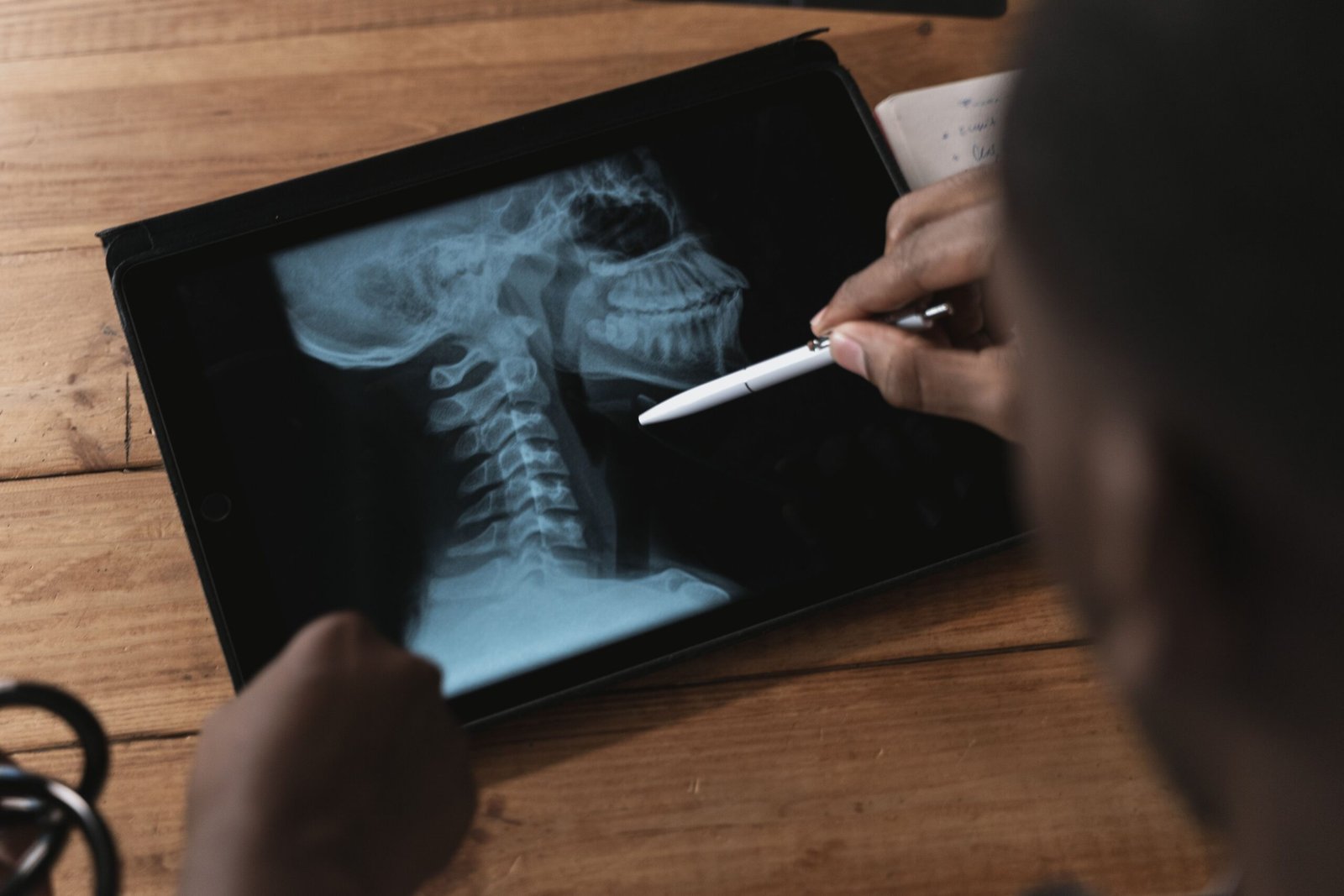
Executive Summary: Tech Neck & The Physical Phone Body
While most consumers measure the cost of smartphone usage in screen time, lost sleep, and reduced attention spans, medical professionals are documenting a far more alarming trend: permanent structural changes to the human body.
Coined informally by physicians as “Phone Body,” prolonged daily smartphone use (averaging 7+ hours per day) is altering cervical spine disc integrity, accelerating cellular death in young adults, indirectly fueling childhood myopia, and serving as a key marker in declining population grip strength.
Biomechanical & Physiological Impact Matrix
| Anatomical Zone | Conventional Belief | Clinical Reality (Medical Studies) | Actionable Medical Protocol |
| Cervical Spine (Tech Neck) | Caused purely by sitting slouched | 60 lbs force on cervical discs; premature cell death in 20s | Recline 25°–30° with lumbar/headrest support (Dr. Riew Protocol) |
| Ocular System (Myopia) | Screen blue light destroys vision | Indoor habit prevents ~2,000 lux natural daylight exposure | 2 hours daily outdoors (minimum 15-minute bursts in shade/sun) |
| Musculoskeletal System | Smartphone typing weakens fingers | Grip strength decline reflects broader systemic sedentary lifestyle | Resistance training & total-body functional movement |
Core Medical Insights & Preventative Protocols
1. The 30-Degree Recline: Why “Sitting Straight” Fails the Spine
Traditional posture advice mandates sitting at rigid 90-degree angles. However, Dr. K. Daniel Riew (Och Spine at New York-Presbyterian) warns that 90-degree sitting inevitably forces the back muscles to fatigue, causing a collapse into slouching.
- The Solution: Lean back at a 25° to 30° recline using a chair with proper lumbar support and a headrest. This shifts head weight away from the cervical spine muscles and directly into the chair structure.
2. The Outdoor Light Deficit: Fixing Screen-Induced Myopia
Vision scientist Donald Mutti (CLEERE Study) highlights that close-up screens are not directly re-shaping the eyeball. Instead, screens trap children indoors, depriving the retina of dopamine-stimulating natural light.
- The Solution: Ensure children spend at least 2 hours per day outdoors. Daylight reaching 2,000 lux (easily available even in outdoor shade) triggers protective retinal dopamine release, halting axial eyeball lengthening.
3. Grip Strength as a Mortality Biomarker
Medical sociologist Dr. Johannes Beller emphasizes that dropping grip strength is not simply a hand muscle issue—it is a proxy metric for general cardiovascular, muscular, and systemic health decline across generations.
Frequently Asked Questions (FAQ)
Q1: Can cervical disc degeneration from “tech neck” be reversed once it occurs?
No. While muscle strain and inflammation can be treated, spine surgeons warn that once cervical disc cells suffer premature cell death from chronic overloading, the structural tissue cannot regenerate.
Q2: Is blue light filter glass enough to prevent screen vision damage in adults?
Blue light filters reduce subjective eyestrain and sleep disruption, but adult eyes are structurally stable. The main eye risk for adults is dry eye and strain, best managed by keeping screens at eye level and taking regular breaks.