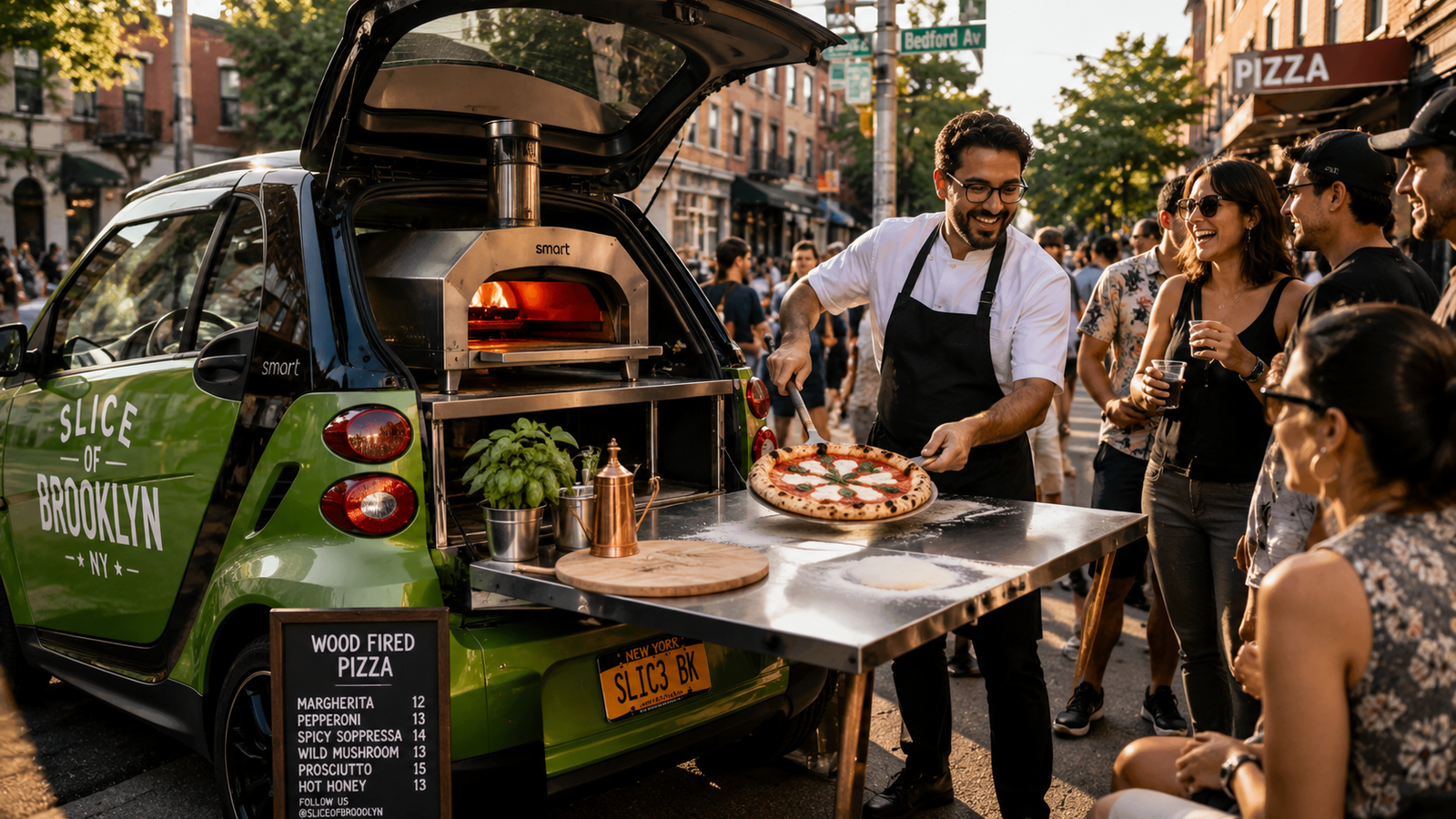
In a city known for fierce culinary competition and sky-high commercial real estate, one New York chef found an ingenious way to bypass rent overhead altogether. The Pizza Pod NYC Smart Car concept—founded by 38-year-old chef Bradley Alvelo—proves that modern food entrepreneurship does not require an expensive brick-and-mortar lease to turn a consistent profit.
Operating out of the trunk of a customized bright green two-seater Smart car, Alvelo turns out gourmet 12-inch artisanal pies on the go, averaging approximately $12,000 in monthly gross revenue while captivating street-level crowds across Brooklyn and Manhattan.
📊 Business Model & Financial Snapshot: Pizza Pod NYC
Losing Corporate Job ➔ Converting $5K Smart Car ➔ Adding Dual 800° Ovens ➔ Avoiding $15K NYC Rent ➔ $12,000/Month Gross Sales
| Business Parameter | Metric / Details | Strategic Impact |
| Startup Equipment Cost | ~$1,800 (Dual Ovens + Generator) | Ultra-low barrier to entry |
| Vehicle Asset | Pre-owned Smart Car ($5,000) | Zero parking hassle in NYC |
| Monthly Storefront Rent | $0.00 | Dodges $8,000–$20,000/month NYC rents |
| Average Monthly Gross Sales | ~$12,000 | High margin retention |
| Product Pricing | $16.00 to $20.00 per 12″ pie | Competitive artisanal pricing |
| Food Cost per Unit | $4.00 to $5.00 | Strong gross profit margins |
| Dough Fermentation | 72-Hour Slow Cold Ferment | High product quality standard |
4 Entrepreneurial Takeaways from the Smart Car Pizzeria
1. Eliminating Commercial Rent to Protect Margins
In New York City, traditional restaurant operators often spend between $8,000 and $20,000 every month on lease commitments alone. By transforming a compact vehicle into a fully self-contained kitchen, Pizza Pod NYC operates on minimal fixed overhead, spending roughly $50 a week on generator fuel.
2. The Power of “Circus-Level” Visual Marketing
Street-level novelty generates organic viral distribution. Pulling 800-degree stone-baked pizzas from the trunk of a tiny subcompact car naturally turns pedestrians into content creators. The curiosity factor drives foot traffic to coffee shops, breweries, and wine bars that partner with Pizza Pod for lucrative pop-up activations.
3. Product Excellence Over Gimmickry
Novelty gets the first purchase, but product quality drives recurring revenue. Trained at the Culinary Institute of America, Alvelo utilizes a custom blend of Italian Tipo 00 and bread flour, fermented for 72 hours. Standout offerings like the Guava Pepperoni pie—a tribute to his Puerto Rican heritage—combine sweet and savory notes to build a loyal neighborhood customer base.
4. Micro-Catering and Event Monetization
Beyond sidewalk foot traffic, mobile flexibility unlocks high-ticket B2B catering. Pizza Pod regularly books corporate events, private birthday parties, and festival appearances without the logistics overhead of a heavy food truck.
The Broader Shift in Urban Street Food
Alvelo’s pivot from corporate dining to micro-entrepreneurship reflects a broader trend among modern culinary professionals. Much like how casinos are rethinking floor spaces for experiential food halls, independent chefs are shifting toward nimble, experiential micro-concepts that prioritize customer connection and lean unit economics.
For entrepreneurs evaluating small-business startup ideas, the blueprint of Pizza Pod NYC proves that ingenuity and resourcefulness can outmaneuver massive capital requirements. To explore more about the business model, check out official updates via CNBC Make It.
Read –The Big Casino Pivot: How Operators Are Using Street Food, Spas, and Sports to Win Over Gen Z.