Culinary professionals share practical guidelines on where premium ingredients deliver flavor and where budget supermarket alternatives win.
Most shoppers assume professional chefs stock their home kitchens with top-shelf specialty products from wall to wall. In reality, experienced restaurant cooks know that exorbitant prices often fund clever packaging rather than noticeably superior taste. Spending your grocery budget wisely requires understanding which ingredients serve as core flavor pillars and which rely purely on retail marketing. From high-grade olive oils to overhyped truffle aromatics, professional cooks highlight clear boundaries between meaningful quality and wasted household funds. Here is the definitive breakdown of what is truly worth top dollar and what belongs in the budget cart.
What Happened:
Professional chefs from leading kitchens across the United States recently evaluated common supermarket categories, outlining where quality upgrades matter and where lower-cost alternatives perform just as well. The guiding rule for industry insiders is straightforward: spend money when an ingredient is front and center on the plate, but avoid paying extra for convenience, branding, or subtle qualities masked by heavy seasonings.
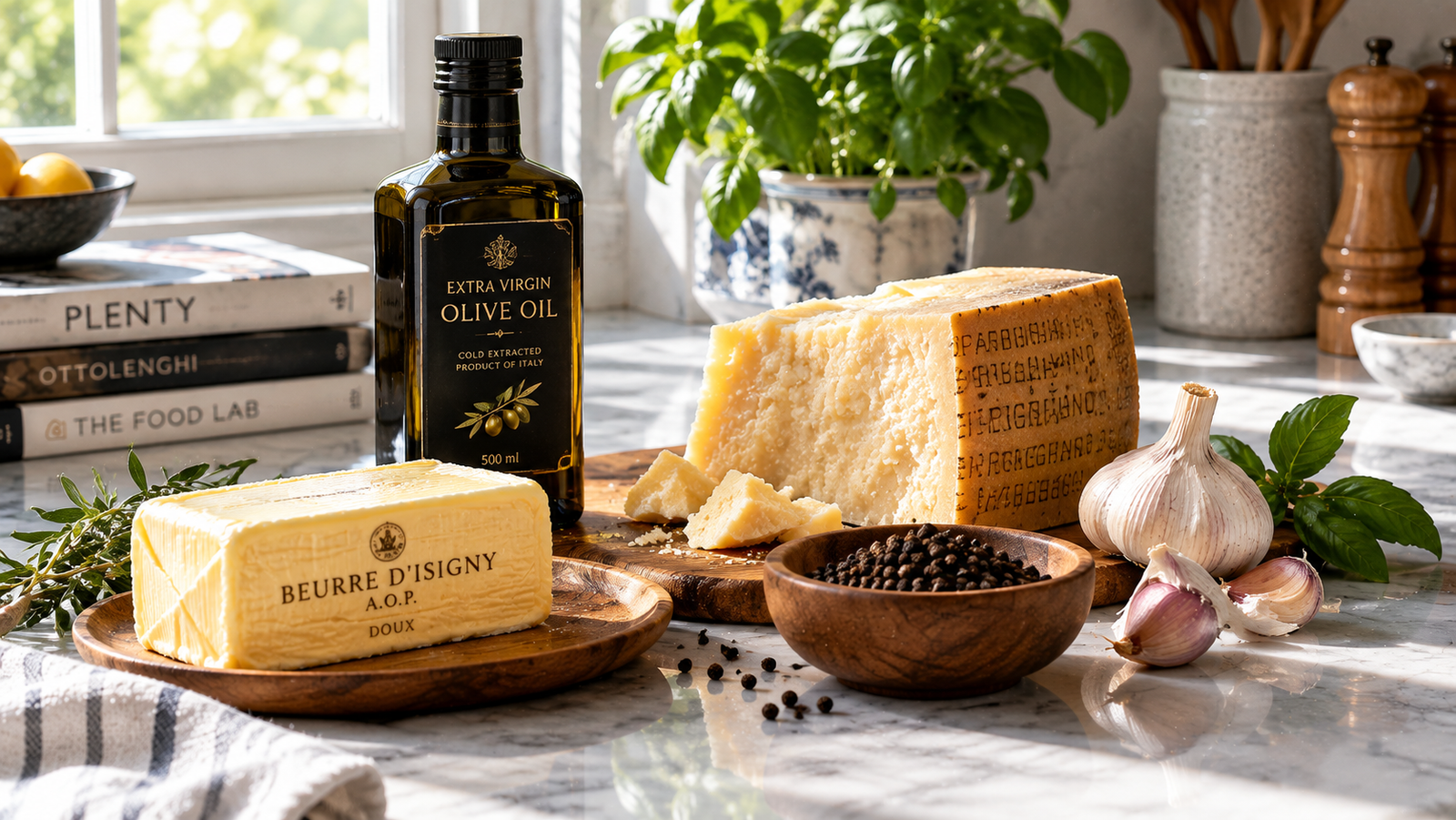
Cooking fats emerged as an essential category where spending extra pays noticeable dividends. Chefs highlighted genuine extra virgin olive oil and high-fat European-style butter as indispensable foundational ingredients. Cold-pressed oils provide peppery, aromatic notes that elevate finished salads and seafood, while butter containing higher butterfat percentages yields superior texture and richness in everyday baked goods, pan sauces, and breakfast preparations.
Seafood represents another critical category where paying more ensures food safety and delicate sweetness. Chefs advise purchasing whole or fresh fillets from busy fishmongers where turnover is rapid, rather than relying on unregulated terms like sushi-grade on prepackaged supermarket foam trays.
Conversely, culinary experts identified several popular luxury products as poor values. Premium ground meats, such as ground Wagyu, offer little advantage over standard chuck once fat-to-meat ratios are balanced. Similarly, pre-seasoned produce, refrigerated fresh pasta, and artificial truffle oils represent substantial retail markups with no culinary benefit.
Chefs strongly advocate purchasing generic store brands for canned tomatoes and flash-frozen vegetables, noting that these budget staples are often harvested and packed at peak ripeness, regularly outperforming off-season fresh produce.
Why This Matters Globally:
Food price inflation remains a stubborn economic challenge for households across North America, the United Kingdom, and Europe. In the United States, grocery costs have risen substantially over recent years, prompting consumers to scrutinize supermarket receipts and seek out practical strategies to stretch monthly budgets.
A parallel challenge faces shoppers internationally, where grocery retailers increasingly introduce expensive private-label gourmet lines to capture higher margins. By identifying which culinary elements justify higher costs, families can protect their finances while preserving high-nutritional standards and rich home dining experiences.
Global food industry analysts note that convenience markups contribute heavily to consumer overspending. Value-added products such as pre-sliced tubers, marinated meats, and pre-washed greens can carry markups ranging between 200% and 500% compared to basic whole foods.
Knowing how to selectively invest grocery dollars helps curb global consumer debt, reduces food waste caused by rapidly spoiling pre-cut goods, and aligns household spending with genuine nutritional quality rather than superficial brand prestige.
Key Numbers & Statistics:
• $12.00 USD: Supermarket price documented for a small container of six pre-seasoned potatoes, compared to just $2.50 USD for a standard three-pound bulk sack of whole potatoes.
• 300% to 500%: Typical retail markup placed on pre-sliced, marinated, or pre-washed produce compared to intact whole equivalents.
• 82% to 86%: Standard butterfat percentage found in European-style butters, compared to the 80% legal baseline found in standard American butter.
• 0%: Legal regulatory backing or federal oversight defining the supermarket term sushi-grade on retail packaging.
• $150 to $300 USD: Approximate monthly grocery savings achieved by a standard four-person household swapping convenience goods for basic store brands and whole produce.
Expert Analysis:
Food science researchers and seasoned culinary educators emphasize that culinary excellence relies on basic culinary technique rather than high spending. The misconception that expensive ingredients automatically produce better meals is largely maintained by retail food marketing that capitalizes on culinary anxiety among home cooks.
For instance, the widespread consumer fascination with ground Wagyu illustrates a fundamental misunderstanding of meat science. The high monetary value of Japanese Wagyu stems from intramuscular fat marbling in intact steak cuts. Once meat passes through an industrial grinder, high-grade marbling is mechanically pulverized, eliminating its structural advantage over a standard, properly balanced eighty-twenty beef chuck grind.
Furthermore, laboratory testing regularly reveals that cheap synthetic truffle oil contains virtually zero authentic fungi, relying instead on chemical aromatics like 2,4-dithiapentane derived from petroleum. Chefs avoid these products because their harsh scent overpowers complex sauces, leaving home cooks with an artificial flavor profile.
By contrast, naturally aged items such as authentic Parmigiano-Reggiano and cold-pressed extra virgin olive oil cannot be easily simulated in industrial laboratories. These foundational elements contain complex organic acids, esters, and naturally occurring glutamate that provide authentic savory depth, justifying their price tag.
Ultimately, smart consumer behavior in modern grocery aisles mirrors professional kitchen inventory management: purchase basic shelf-stable commodities at wholesale prices, buy intact seasonal produce in bulk, and allocate discretionary capital solely toward genuine, unadulterated flavor enhancers.
What This Means For You:
For household meal planners, implementing professional shopping rules immediately stabilizes weekly kitchen expenses. Redirecting funds away from overpriced luxury burger patties and pre-chopped vegetables easily frees up fifty to seventy-five dollars weekly for retirement savings or high-yield deposit accounts.
For health-conscious consumers, avoiding pre-marinated cuts and commercial spice blends eliminates hidden sodium, artificial preservatives, and inflammatory seed oil additives often used to mask lower-grade ingredients.
For aspiring home cooks, mastering a few core culinary basics—such as toasting whole peppercorns and learning the proper fat ratios for searing proteins—produces restaurant-quality results at a tiny fraction of fine-dining restaurant prices.
Global Reactions:
International consumer watchdog groups have welcomed public disclosures regarding retail food labeling, encouraging regulatory agencies to establish clear definitions for marketing terms like artisan, gourmet, and sushi-grade.
Independent chefs and culinary educators across Europe and North America continue to champion whole-food education. Professional culinary associations argue that empowering consumers with ingredient literacy provides the most reliable protection against retail price gouging and deceptive brand advertising.
What Happens Next:
Over the next six months, commercial grocery chains are expected to expand their mid-tier premium store brands, offering imported European butters and certified single-origin oils to satisfy price-sensitive yet discerning shoppers.
Over the coming twelve months, consumer adoption of whole, unprocessed bulk purchasing is projected to rise steadily, fueled by digital cooking creators demonstrating how simple pantry staples outshine expensive pre-packaged alternatives.
Quick Summary :
• Professional chefs distinguish between grocery products that provide authentic flavor and items driven purely by retail marketing.
• High-fat European butter and unadulterated extra virgin olive oil are worth the extra expense for essential flavor and texture.
• Fresh, properly handled seafood from dedicated fishmongers justifies its price, while the label sushi-grade remains unregulated.
• High-impact flavor additions like authentic aged Parmigiano-Reggiano, whole whole spices, and quality vinegar deliver high culinary value.
• Ground Wagyu represents a needless expense because grinding meat destroys the unique marbling benefits found in premium steaks.
• Pre-seasoned and pre-chopped produce carries heavy retail markups while spoiling significantly faster than intact whole produce.
• Dried durum wheat pasta frequently outperforms expensive fresh pasta by maintaining superior structural al dente texture in hearty sauces.
• Store-brand canned tomatoes and frozen peas match or exceed expensive alternatives because they are preserved immediately at peak ripeness.
• Commercial truffle oils rely heavily on synthetic petroleum-derived chemical aromas rather than genuine culinary truffles.
• Everyday kosher salt performs identically in cooking to expensive specialty varieties like pink Himalayan salt.
Frequently Asked Questions:
Q: Why do chefs prefer European-style butter over standard American butter?
A: European butter contains a higher percentage of butterfat, typically between eighty-two and eighty-six percent, which creates flakier baked pastries, smoother sauces, and richer flavor on basic foods.
Q: Is ground Wagyu beef worth purchasing for home burgers?
A: No, chefs recommend saving money by buying standard ground chuck with an eighty-twenty lean-to-fat ratio, because grinding meat negates the unique marbling benefits found in whole Wagyu steaks.
Q: Does fresh pasta always taste better than dried pasta?
A: No, high-quality dried pasta made from durum wheat retains a firmer al dente texture that holds up better against hearty sauces, whereas fresh egg pasta is delicate and best reserved for light butter broths.
Q: What should shoppers look for when purchasing extra virgin olive oil?
A: Consumers should look for dark glass bottles displaying clear harvest dates, certified origin stamps, and cold-pressed extraction methods to ensure the oil retains its fresh, peppery antioxidants and fruitiness.
Q: Are expensive specialty finishing salts necessary for everyday cooking?
A: No, affordable coarse kosher salt provides clean seasoning throughout the entire cooking process, while expensive flaky salts should be used sparingly as an occasional finishing garnish on plated dishes.
Final Takeaway:
Elevating home cooking does not require spending heavily on luxury packaging or synthetic flavorings. By investing deliberately in quality fats, fresh proteins, and genuine aging, while relying on budget store brands for everyday commodities, anyone can achieve exceptional flavor while keeping household grocery budgets under control.
What’s Your Opinion?
Which luxury grocery items do you consider absolutely essential in your household, and which ones do you skip to save money? Share your favorite supermarket budget tips and kitchen habits in the comments below!