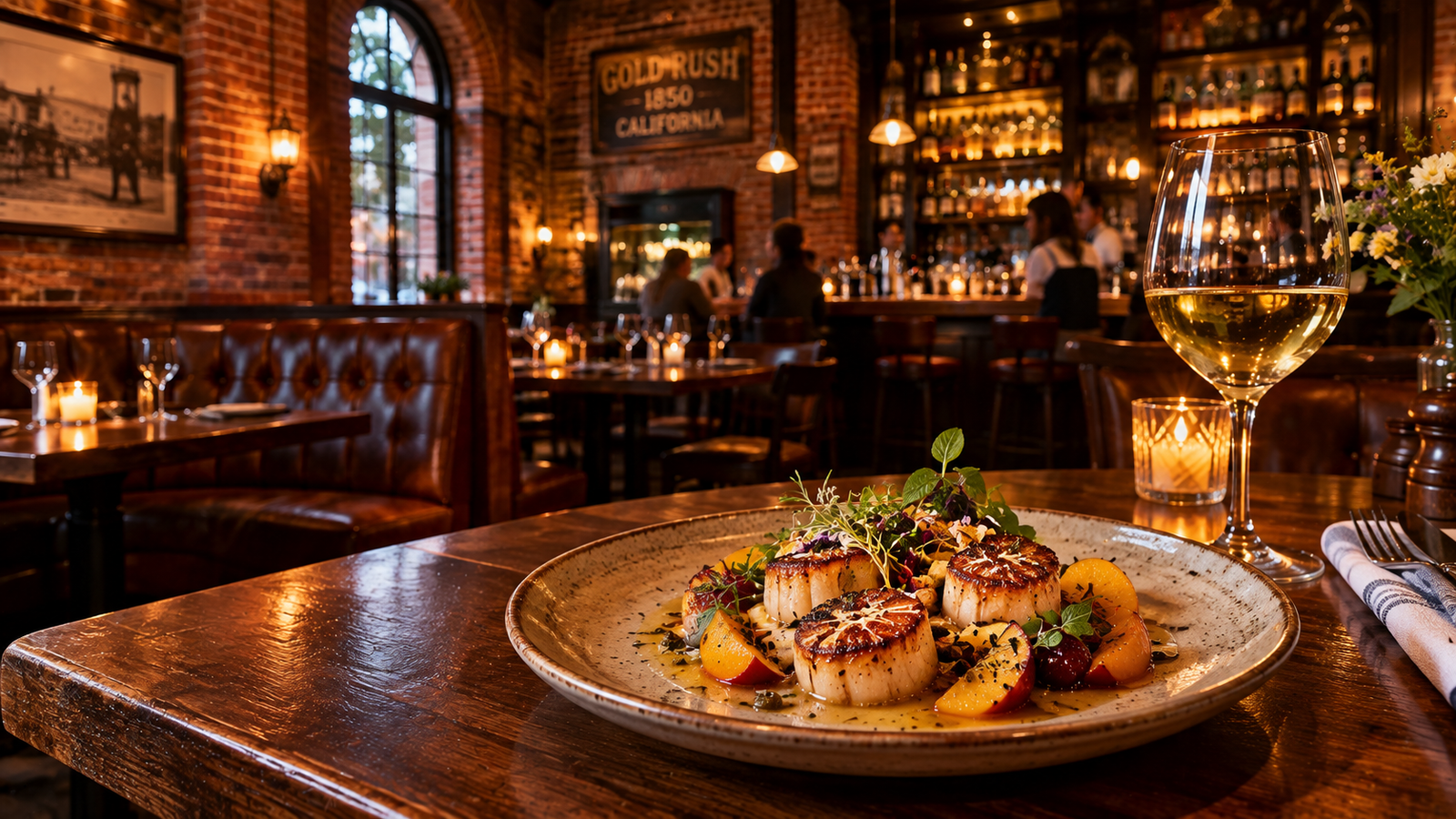
What if the future of five-star dining isn’t happening in Manhattan or Silicon Valley, but inside a sleepy foothill town of 14,000 residents? For half a century, travelers cruising along Interstate 80 viewed Auburn, California, as merely a brief pit stop to grab a bag of roadside fruit and fill up on gas before climbing into the ski resorts of Lake Tahoe. That quiet complacency shattered when the world-renowned James Beard Foundation officially designated a local French bistro as a semifinalist for Best Chef in California. Today, Auburn is running a masterclass in modern agri-tourism economics, drawing high-net-worth weekend travelers and proving that you don’t need an urban zip code to build a world-class culinary empire.
The Strategic Blueprint: How Auburn Built a Culinary Monopoly:
Auburn didn’t stumble into national prestige by accident; its revival was engineered by culinary refugees abandoning the unsustainable overhead of California’s coastal metropolises. The centerpiece of this transformation is Restaurant Josephine, created by seasoned chefs Courtney McDonald and Eric Alexander. Instead of signing commercial leases running upwards of $40 per square foot in San Francisco, the couple renovated a historic 1849 Gold Rush-era brick structure in downtown Auburn.
Their breakthrough strategy relies on hyper-localized vertical integration. Rather than paying commercial distributor markups for produce that spent three days inside a diesel refrigerated truck, McDonald and Alexander harvest organic vegetables, herbs, and heritage Santa Rosa plums straight from their personal foothill family acreage. The resulting menu—combining classical French culinary foundations with Lithuanian ancestral traditions—produces dishes like duck liver mousse with pine cone caramel and savory vareniki dumplings that regularly sell out weeks in advance.
This micro-economy rapidly expanded thanks to young native entrepreneurs who brought elite metropolitan business models back to their rural roots. Jordan and Melinda Minyard launched The Pour Choice on an Old Town hillside, pioneering California’s first hybrid artisanal coffeehouse and regional craft beer taproom. By establishing their own local roastery, Remedy Supply Company, they created a self-contained beverage loop that keeps capital circulating entirely within the municipal zip code.
Down the block, artisan sourdough specialists at The Baker and the Cakemaker demonstrated that craftsmanship scales globally. Leveraging a living 17-year-old sourdough mother culture and local orchard citrus, their Meyer lemon rosemary loaf took home second place at the International World Bread Awards in Las Vegas, sparking three-hour weekend road trips from food enthusiasts across the state.
The Financial Playbook: Big-City Overhead vs Small-Town Cash Flow:
To understand why top culinary talent is permanently abandoning urban downtown cores, compare the hard economic realities facing a standard 60-seat independent restaurant:
Capital Metric: Prime Metropolitan Location (San Francisco / New York)
• Average Monthly Commercial Lease: $16,000 to $25,000 USD
• Minimum Viable Pre-Opening Buildout: $2,500,000 to $4,000,000 USD
• Local Wholesale Distributor Markup: 28% to 35% on fresh produce
• Average Tasting Menu Price Required for Solvency: $225 to $350 USD per guest
• Net Operating Margin: 3% to 5% (high vulnerability to economic downturns)
Capital Metric: Regional Agri-Heritage Location (Auburn, California)
• Average Monthly Commercial Lease: $3,500 to $6,000 USD
• Minimum Viable Pre-Opening Buildout: $600,000 to $1,200,000 USD
• Local Wholesale Distributor Markup: 0% to 10% (direct farm-to-kitchen sourcing)
• Average Tasting Menu Price Required for Solvency: $85 to $130 USD per guest
• Net Operating Margin: 14% to 22% (strong liquidity buffer)
This immense financial disparity explains why independent dining inside major coastal capitals is consolidating into corporate restaurant groups, while high-conviction creative chefs are building sustainable, debt-free equity in regional historic districts.
The Curated 24-Hour Auburn Culinary Itinerary:
For visitors planning an intentional gastro-tourism pilgrimage, navigating Auburn requires an insider strategy to avoid peak waitlists:
• 08:30 AM: Morning Artisan Awakening at The Pour Choice Secure a table on the second-story open-air timber patio. Order the house-roasted iced Strawberry Fields cream-top espresso paired with thick-sliced lemony avocado toast crafted on locally baked sourdough.
• 11:30 AM: Sourdough Pilgrimage at The Baker and the Cakemaker Arrive early before morning loaves sell out. Target the award-winning Meyer lemon rosemary sourdough loaf and the seasonal peach sweet brioche stuffed with guava pastry cream.
• 02:00 PM: Historic Old Town Walk & River Exploration Stroll through Auburn’s 1850s courthouse district and explore the American River canyon trails to build an appetite while observing preserved Gold Rush architecture.
• 05:15 PM: Pre-Dinner Craft Pours at Remedy Supply Co. or Pizzeria Luba Sample micro-batch regional wines produced across the Sierra foothills or sip low-intervention craft ales.
• 06:30 PM: The Main Event at Restaurant Josephine Take a leather booth inside the candlelit dining room. Order the wild bay scallop crudo dressed in lemon verbena gelee, followed by the fragrant moules frites infused with serrano chiles, and finish with farm-to-table vareniki dumplings.
The Global Economic Domino Effect:
The decentralization of gastronomy is reshaping commercial capital allocations across North America and Europe:
• Commercial Real Estate Rebalancing: Secondary lifestyle towns within a two-hour radius of major metropolitan centers are absorbing significant residential and boutique commercial investments. Commercial vacancy rates along historic main streets drop sharply once award-winning culinary anchors take root.
• Agricultural Land Valuation: Small-scale farming parcels (5 to 20 acres) located within foothill microclimates are gaining financial premiums. Institutional investors and private operators are acquiring parcels to secure dedicated supply agreements with luxury hospitality ventures.
• Tax Base Diversification: Municipalities that prioritize historic preservation and boutique culinary licensing capture high-yield transient occupancy taxes (TOT) and retail sales tax, reducing fiscal dependency on heavy commercial manufacturing.
Critical Numbers That Define The Movement:
• $1.85 million USD: Estimated capital cost differential saved during the first three years of operating in a foothill hub compared to tier-one urban cores.
• 17 years: Documented lineage of Auburn’s award-winning sourdough starter culture, maintained continuously through daily hand feedings.
• 22%: Top-end net operating margin achieved by vertically integrated, farm-sourcing boutique restaurants versus the industry average of 4%.
• 1849: Historical benchmark year of Auburn’s establishment during the California Gold Rush, providing historic brick retail footprints.
• 45 minutes: Direct transit commute from Sacramento International Airport, giving global culinary travelers direct regional access.
The Investment Angle: How Modern Operators & Consumers Win:
For investors, the playbook is clear: identify historic transit corridors with preserved architecture, active agricultural zoning, and proximity to wealthy metropolitan commuters. Early acquisitions of commercial storefronts in these corridors regularly deliver outsized capital appreciation once national media coverage ignites public interest.
For everyday diners and consumers, visiting regional culinary destinations offers a dual advantage. You gain access to James Beard-caliber culinary mastery at roughly half the retail check of big-city dining rooms, while directly supporting agricultural preservation and small-scale domestic farming families.
What Happens Next in Gold Country:
Over the next six months, advance dinner reservations across Auburn will book out several months ahead, driving spillover demand toward regional newcomers like Oakhouse steakhouse and Pizzeria Luba.
Over the coming 12 to 24 months, institutional hospitality developers will likely greenlight boutique luxury hotel projects along Old Town Auburn, finally providing upscale overnight accommodations to capture the millions of tourist dollars currently flowing back to Sacramento and Lake Tahoe.
Quick Executive Summary:
• Auburn, California has evolved from a routine mountain rest stop into an internationally recognized culinary destination.
• Restaurant Josephine earned a historic James Beard Foundation semifinalist nomination for Best Chef in California.
• Chefs Courtney McDonald and Eric Alexander leverage farm-direct sourcing from their personal foothill family property.
• Hybrid concepts like The Pour Choice successfully unified third-wave specialty roasting with craft beer culture.
• The Baker and the Cakemaker won second place honors at the International World Bread Awards in Las Vegas.
• Urban restaurateurs are migrating to secondary markets to escape prohibitive leases and 4% metropolitan profit margins.
• Commercial real estate and municipal retail tax revenues in regional culinary corridors continue to climb.
Frequently Asked Questions:
Q: What makes Restaurant Josephine in Auburn nationally recognized?
A: Executive chefs Courtney McDonald and Eric Alexander earned a James Beard Award semifinalist nomination by blending classical French technique with Lithuanian culinary roots, using organic produce and stone fruit grown directly on their private family farm.
Q: How does dining in Auburn compare financially to San Francisco or Los Angeles?
A: Diners in Auburn enjoy comparable culinary technique and fresher, farm-direct ingredients at roughly forty to fifty percent lower menu prices than equivalent fine-dining venues in major metropolitan centers.
Q: What is the optimal season to visit Auburn for food tourism?
A: Late spring through mid-autumn offers the finest experience, coinciding with local stone fruit harvests, outdoor patio weather, and peak produce availability across foothill farms.
Q: Can commercial real estate investors still find opportunities in Auburn?
A: Yes. Historic retail spaces, small boutique lodging assets, and agricultural land parcels across Placer County continue to offer strong appreciation potential as gastro-tourism expands.
Q: Why are chefs moving away from major metropolitan centers?
A: Soaring commercial lease rates, high municipal fees, and tight supply chains compress urban restaurant profits to near-zero, making regional towns with low overhead and agricultural access far more lucrative.
Final Takeaway:
Auburn has fundamentally redefined what a historic mountain community can achieve in the modern economy. By swapping corporate franchised uniformity for deep agricultural authenticity and historic craftsmanship, this Gold Country hub has built a thriving economic engine that will influence American dining for decades to come.
What’s Your Opinion?
Are you ready to skip the crowded lines of big-city restaurants to discover world-class food in historic small towns? Drop your thoughts, favorite hidden culinary gems, and travel tips in the comments below!