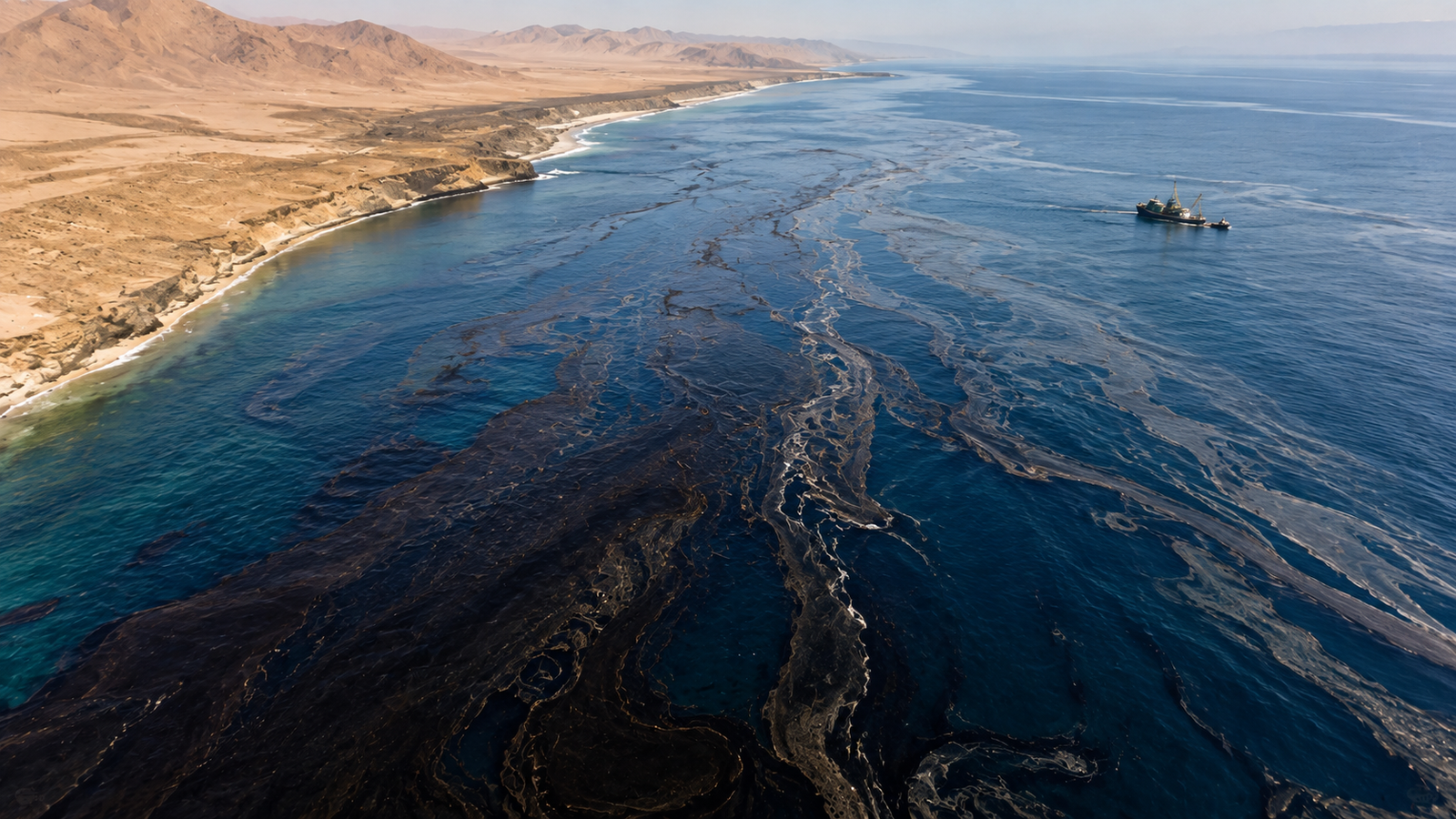
A massive marine oil slick spanning over 300 square kilometers (116 square miles) has washed ashore along southern Qeshm Island, Iran, threatening critical marine habitats and UNESCO-protected ecosystems.
According to verified forensic investigations and satellite telemetry analyzed by BBC Verify, SkyTruth, and TankerTrackers.com, the environmental disaster originated from the Liberia-flagged bulk carrier Minoan Pioneer, which caught fire after being struck by a projectile in Omani waters on August 3.
The spill highlights the intensifying environmental and economic collateral damage caused by military escalation and maritime blockades along the Strait of Hormuz—the world’s most vital energy transit chokepoint.
Chronology of the Disaster: From Missile Strike to Coastal Washup
Aug 3: Minoan Pioneer Struck near Oman ➔ Aug 5: Ship Burns & 10 sq km Slick Forms ➔ Aug 7–10: Slick Expands North-West (300+ sq km) ➔ Oil Washes onto Suza Beach
| Timeline Milestone | Event & Evidence Source | Environmental / Operational Impact |
| August 3 | Projectile impact reported by maritime security firm Vanguard | Minoan Pioneer disabled and burning in Omani maritime corridor |
| August 5 | High-resolution satellite imagery | Active fires onboard; initial 10 sq km heavy fuel oil plume detected |
| August 7–9 | Hydrodynamic drift tracking | Sea currents push expanding slick northwest across the Hormuz corridor |
| August 10 | Verified ground video & Sentinel satellite data | 300+ sq km slick (over 100,000 gallons) coats Suza Beach on Qeshm Island |
Ecological Threat: UNESCO Biosphere and Endangered Species
The location of the oil deposit places high-value coastal biodiversity at immediate risk:
- Hara Biosphere Reserve: Located on the northern coastline of Qeshm Island, this extensive mangrove wetland serves as a critical nursery for commercial Persian Gulf fisheries and a sanctuary for migratory bird flyways.
- Endangered Hawksbill Turtles: The coastal perimeter around Qeshm serves as active nesting grounds for critically endangered Hawksbill sea turtles, whose hatchlings face lethal toxicity from heavy petroleum hydrocarbons.
- Artisanal Fisheries: Local coastal fishing fleets have reported direct contamination, grounding vessels and disrupting seafood livelihoods across southern coastal enclaves.
Maritime Chokepoint Dynamics & Global Trade Impact
The Strait of Hormuz facilitates approximately 20% of global petroleum and liquefied natural gas (LNG) consumption. With over 67 reported commercial maritime strikes in the vicinity since early 2026 amid ongoing regional conflict and reciprocal blockades, maritime risk premiums and tanker insurance rates have surged to record highs.
Maritime intelligence analysts noted the irony that regional strikes targeting transit routes through Omani waters have generated direct, severe environmental contamination along Iran’s own domestic coastline.
Read- Former Puerto Rican Boxer Prichard Colón Passes Away at 33, Eleven Years After Tragic Ring Injury.