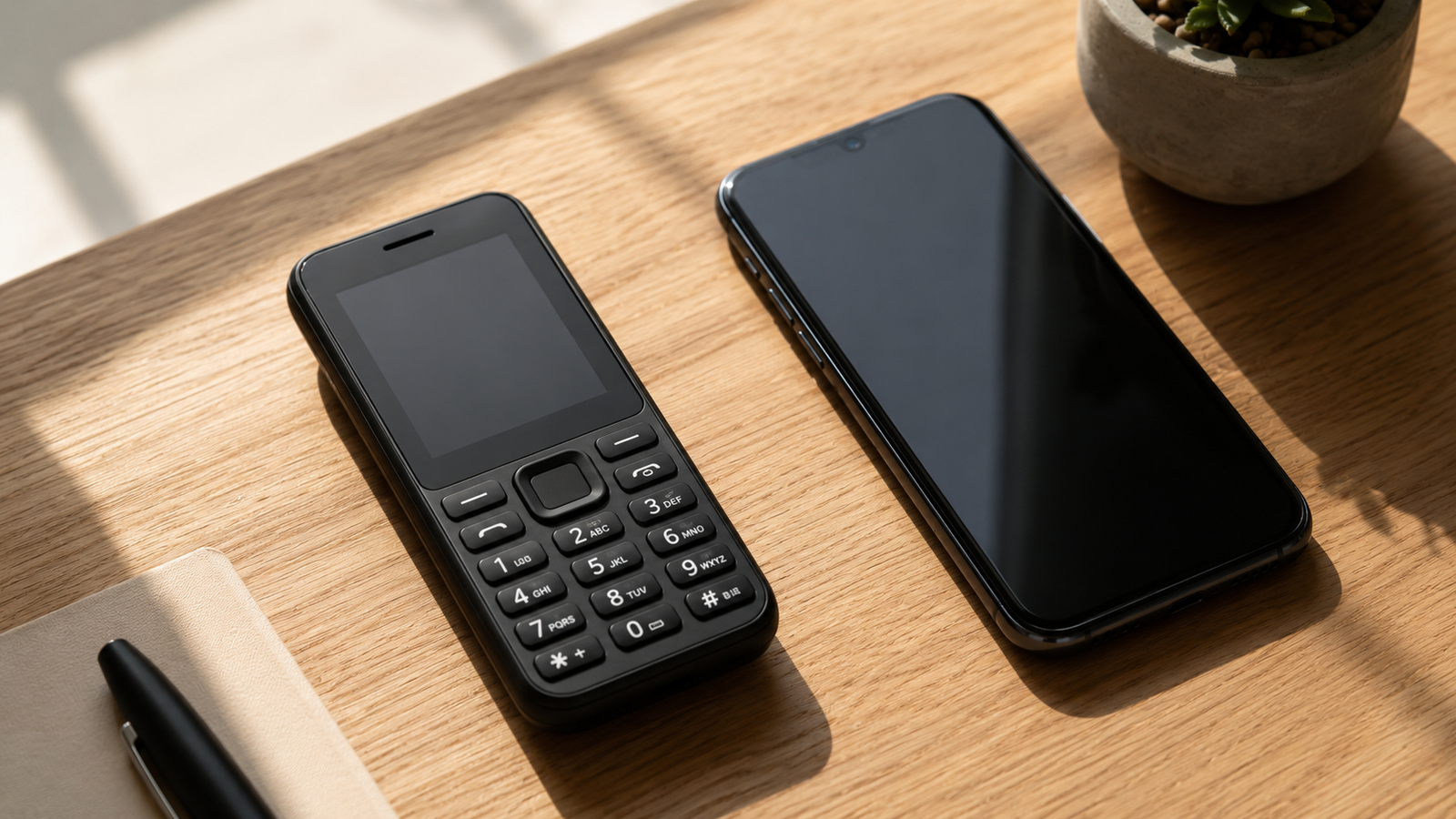
In an era dominated by generative AI smartphones and foldable displays, a counter-intuitive consumer trend is gathering momentum: the deliberate return to feature phones.
According to a global tech community survey published by GSMArena, one-third (33%) of participants reported using a feature phone at least occasionally, while a dedicated minority has abandoned smartphones entirely. Rather than being driven by nostalgia, the resurgence reflects a shift toward digital privacy, distraction-free productivity, and intentional connectivity.
Why People Are Buying “Dumbphones” in 2026
Smartphone Overload & Tracking ➔ Digital Fatigue ➔ Adoption of Minimalist / Feature Phones ➔ Regained Focus & Battery Life
| Primary Motivation | Core Driver | Typical User Profile |
| Digital Detox & Mental Health | Eliminating algorithmic doomscrolling & notification fatigue | Gen Z, knowledge workers, students |
| Data Privacy & Minimal Tracking | Bypassing invasive background app telemetry & location harvesting | Privacy advocates, security professionals |
| Secondary Device Separation | Keeping work calls and personal lines on distinct physical hardware | Business owners, frequent travelers |
| Battery Life & Durability | Multi-day battery endurance with rugged drop resilience | Outdoor workers, emergency backup users |
The Two Categories of Modern Feature Phones
The modern feature phone market has evolved beyond 2000s-era plastic handsets into two distinct hardware categories:
- Pure Feature Phones (Classic Proprietary OS):Devices like the HMD/Nokia 215 4G and Nokia 235 4G run lightweight operating systems with physical numeric keypads. They support 4G VoLTE calling, basic SMS, and battery life measured in days, with zero social media apps.
- Minimalist “Smart-Feature” Hybrids:Devices like the Light Phone III, Mudita Kompakt, and Qin F22 Pro run locked-down Android forks. They feature high-contrast E-ink or monochrome displays, providing essential utilities (maps, ride-hailing, authentication) while blocking app stores, browser feeds, and notification loops.
Why Smartphones Remain Hard to Completely Ditch
While the appeal of a simpler device is strong, complete transitions face structural hurdles:
- Mandatory Two-Factor Authentication (2FA): Banking and corporate logins frequently mandate proprietary authenticator apps rather than SMS codes.
- Essential Messaging Infrastructure: In regions across Europe, Latin America, and Asia, platforms like WhatsApp and WeChat are essential for local commerce and family coordination.
- QR-Code Payments: Cashless transit and point-of-sale systems increasingly require smartphone camera scanners.
For most users, the sweet spot is not total abandonment, but using a feature phone as an evening and weekend secondary handset to regain focus without breaking connectivity.
Read –
Nate Bargatze Breaks Guinness World Record for Highest Stand-Up Comedy Tour Ticket Sales.