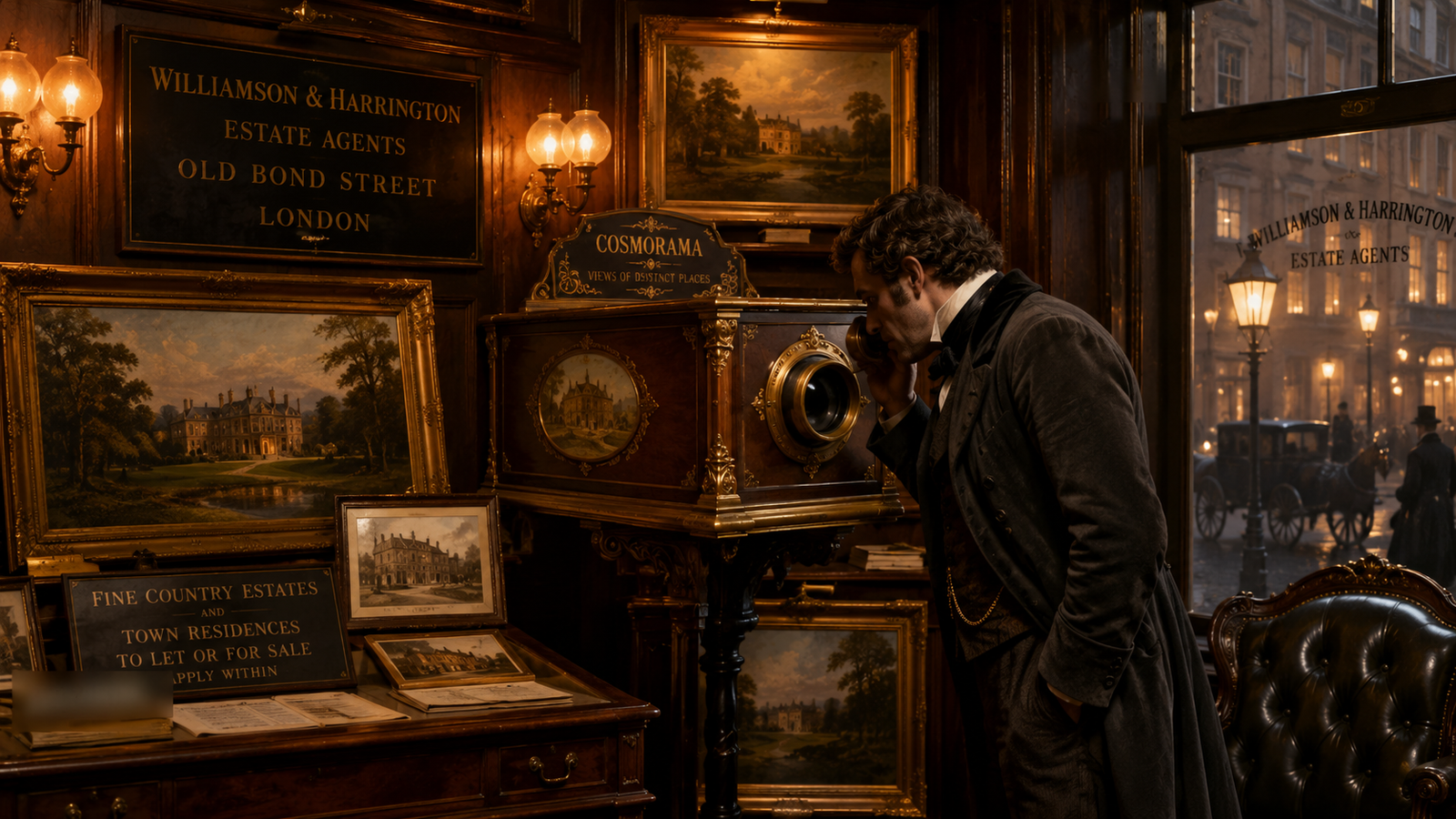
Modern real estate buyers rely on high-definition drone footage, 3D interactive floor plans, and VR walkthroughs to inspect properties before scheduling a visit. However, historical research from the University of Exeter has revealed that the concept of remote property previews is more than 180 years old.
During the 1840s and 1850s—decades before photography became a standard marketing medium—London auctioneers and estate agents Brooks and Hedger (later Brooks and Green) deployed an optical viewing system called the Cosmorama to provide wealthy clients with immersive, 3D-like “virtual tours” of lavish country estates.
What Was the Cosmorama and How Did It Work?
Originally invented in Paris in 1808 by Abbot Constant Gazzera as public entertainment, the Cosmorama was adapted by elite London estate agents into a commercial sales tool:
Artist Paints Aerial Estate Vista ➔ Mounted Inside Dark Viewing Box ➔ Convex Lenses Magnify & Create Depth ➔ Client Experiences Remote "Virtual Tour"
| Technology Aspect | 19th-Century Cosmorama (1838–1859) | Modern Real Estate Walkthrough (2026) |
| Viewing Mechanism | Large convex optical lenses set into dark gallery walls | Matterport 3D digital scans, WebGL, & VR Headsets |
| Image Source | Hand-painted aerial illustrations made on-site | Drone photography & 4K 360-degree cameras |
| Lighting Effect | Controlled directional oil/gas lamps behind viewing slits | High Dynamic Range (HDR) digital rendering |
| Target Audience | Wealthy aristocrats buying distant country manors | Global retail buyers & institutional property investors |
Why Old Bond Street Agents Pioneered Remote Viewings
In the early 19th century, traveling from London to inspect rural estates in Yorkshire or the Scottish Highlands required days of difficult coach travel.
According to archival newspaper advertisements uncovered by Professor John Plunkett, Brooks and Green offered “several hundred views of different estates” viewed from an aerial perspective:
- Overcoming Distance: Advertisements promoted the Cosmorama as a way for purchasers “intent on visiting a distant property” to bring it into view and select the best estate before undertaking expensive travel.
- The First Specialized Estate Agency Boom: Rapid urbanisation, population growth, and expanding railway networks created a competitive real estate market where visual presentation gave elite agents a commercial edge.
- Pre-Photography Immersion: Because traditional black-and-white daguerreotypes could not capture wide estate grounds or color fidelity, hand-painted illuminated lens displays offered the most vivid visual preview possible.
The Precursor to Modern PropTech
The discovery reframes how historians view early visual media. Rather than being merely a Victorian novelty or street “peepshow,” optical immersion was actively used to drive commercial high-value transactions.
Brooks and Green operated their private Cosmorama viewing rooms on Old Bond Street for nearly two decades, establishing the operational foundation for what would eventually evolve into modern digital real estate platforms like Rightmove, Zillow, and immersive spatial computing walkthroughs.
Read – Why 1 in 3 Tech Users Still Rely on Feature Phones: The Anti-Smartphone Revival.
Nate Bargatze Breaks Guinness World Record for Highest Stand-Up Comedy Tour Ticket Sales.