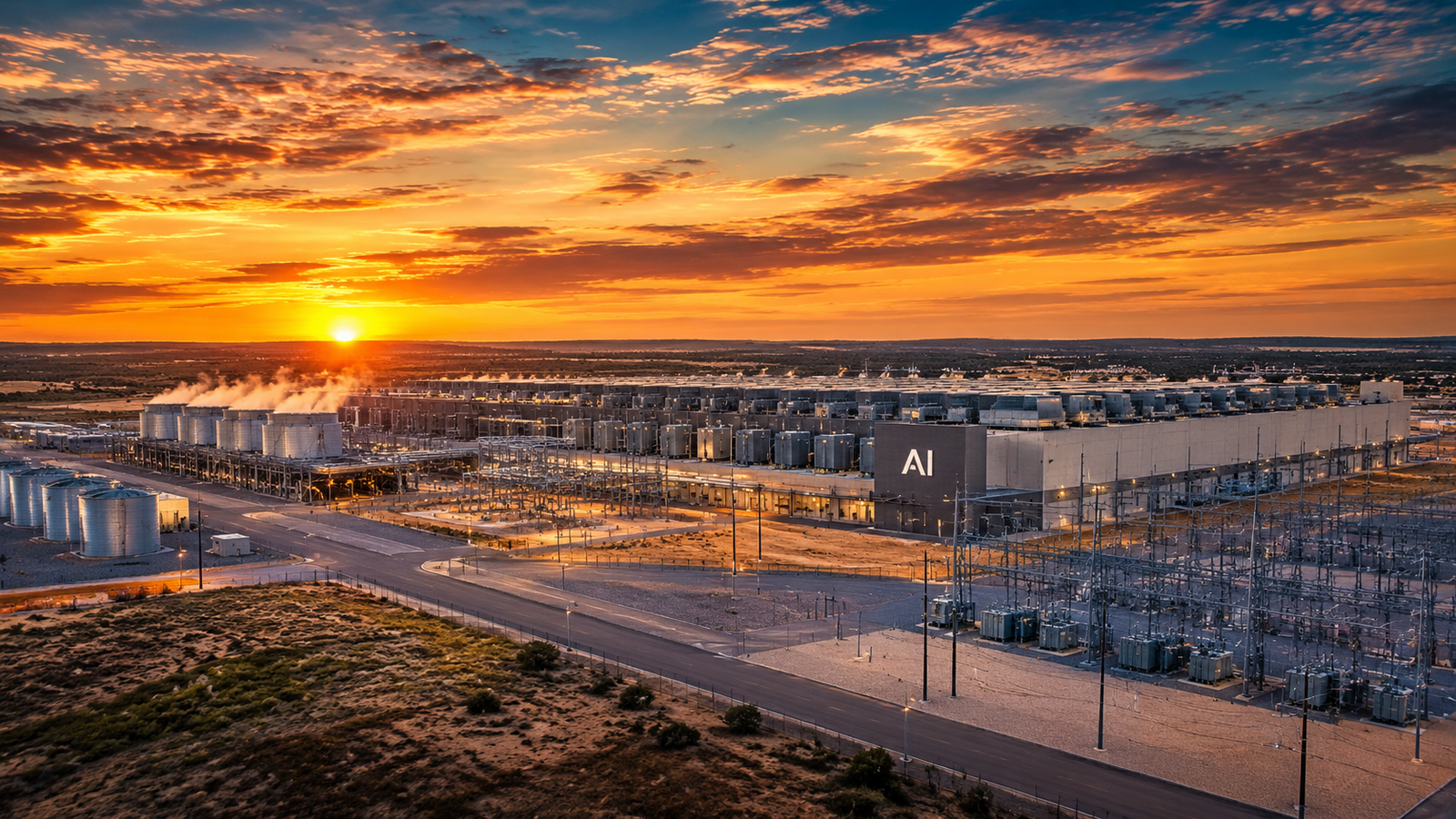
As the race to construct gigawatt-scale artificial intelligence campuses accelerates, the financial architecture supporting these mega-projects is encountering a major institutional hurdle: the global commercial insurance market cannot assemble enough capacity to insure them against total loss.
According to credit filings and reporting from the Financial Times, the $14 billion “Project Sopaipilla” data center campus in El Paso, Texas—jointly developed by Meta Platforms (20%) and asset management giant BlackRock (80%)—is operating under partial insurance coverage.
Advised by the world’s largest insurance broker, Marsh LLC, the joint venture secured hundreds of millions in capped coverage based on statistical risk modeling. However, the policy terms leave bondholders and institutional lenders exposed to billions in unhedged losses in the event of extreme catastrophic failure.
The Insurance Shortfall Breakdown: Project Sopaipilla
$14B Campus Value ➔ Insurers Cap Exposure (PML Model) ➔ $450M Property Cap ➔ Billions in Residual Downside Shifted to Lenders
Because replacement costs for high-density GPU clusters and specialized substations run into tens of billions of dollars, underwriters refuse to take on concentrated single-site risk. As a result, coverage is capped at discrete operational tiers:
| Policy Coverage Type | Purchased Insurance Limit | Annual Premium / Term | Risk Exposure & Remaining Liability |
| All-Risk Property (Operational) | $450 Million (escalating +2% annually) | ~$5 Million / year | Uninsured for Total Loss; damages above $450M are not covered by underwriters |
| All-Risk Property (Construction) | $427 Million | Included in project build | Building phase losses above cap fall on developers |
| Rent Abatement (Delays) | $218 Million | Project-specific term | Protects debt service during temporary construction stoppages |
| Terrorism & Sabotage | $645 Million | Standard commercial pool | Direct physical damage coverage from external acts |
| Commercial General Liability | $50 Million per event / $50M aggregate | ~$1 Million / year | Environmental lawsuits or catastrophic third-party damages exceeding $50M |
The “Probable Maximum Loss” Gamble
To make the $12.3 billion Sopaipilla debt offering palatable to institutional bondholders without total loss insurance, Marsh and BlackRock utilized a Probable Maximum Loss (PML) actuarial model:
- The 1-in-500 Year Benchmark: The insurance limits were modeled around a catastrophic fire or natural event with a 1-in-250 to 1-in-500-year probability, which translates to a 3.9% to 7.7% statistical likelihood over Meta’s 20-year operational lease.
- Meta’s Financial Backstop: Standard & Poor’s (S&P) noted that if insurance payouts fall short, Meta is contractually obligated to bridge financial gaps up to $450 million.
- The 18-Month Termination Clause: Crucially for credit risk, S&P highlighted that if a major casualty disrupts the facility for more than 18 months, Meta has the contractual right to terminate its lease without penalty, potentially leaving bondholders holding debt backed by damaged physical real estate.
Why AI Infrastructure Has Outgrown the Insurance Sector
The Sopaipilla financing structure signals a structural shift across the entire AI hyperscaler industry:
- Capacity Saturation: Global property insurers do not have the balance-sheet reserves to write $10B+ single-site policies for dozens of gigawatt-scale campuses across Texas, Virginia, and the Midwest simultaneously.
- Broker Conflict Questions: Legal experts highlight emerging friction where global brokers act simultaneously as financial risk advisers to debt syndicates and commissioned sales intermediaries placing the insurance policies.
- Credit Rating Tolerance: Despite the multi-billion coverage shortfall, rating agencies (S&P rated A+, Fitch and KBRA rated AA-) continue to assign investment-grade ratings to off-balance-sheet AI debt, banking on low statistical catastrophe probabilities and hyperscaler creditworthiness.
Read –The AI Music Flood: Why Spotify and Deezer Are Under Pressure from Artists and Listeners.