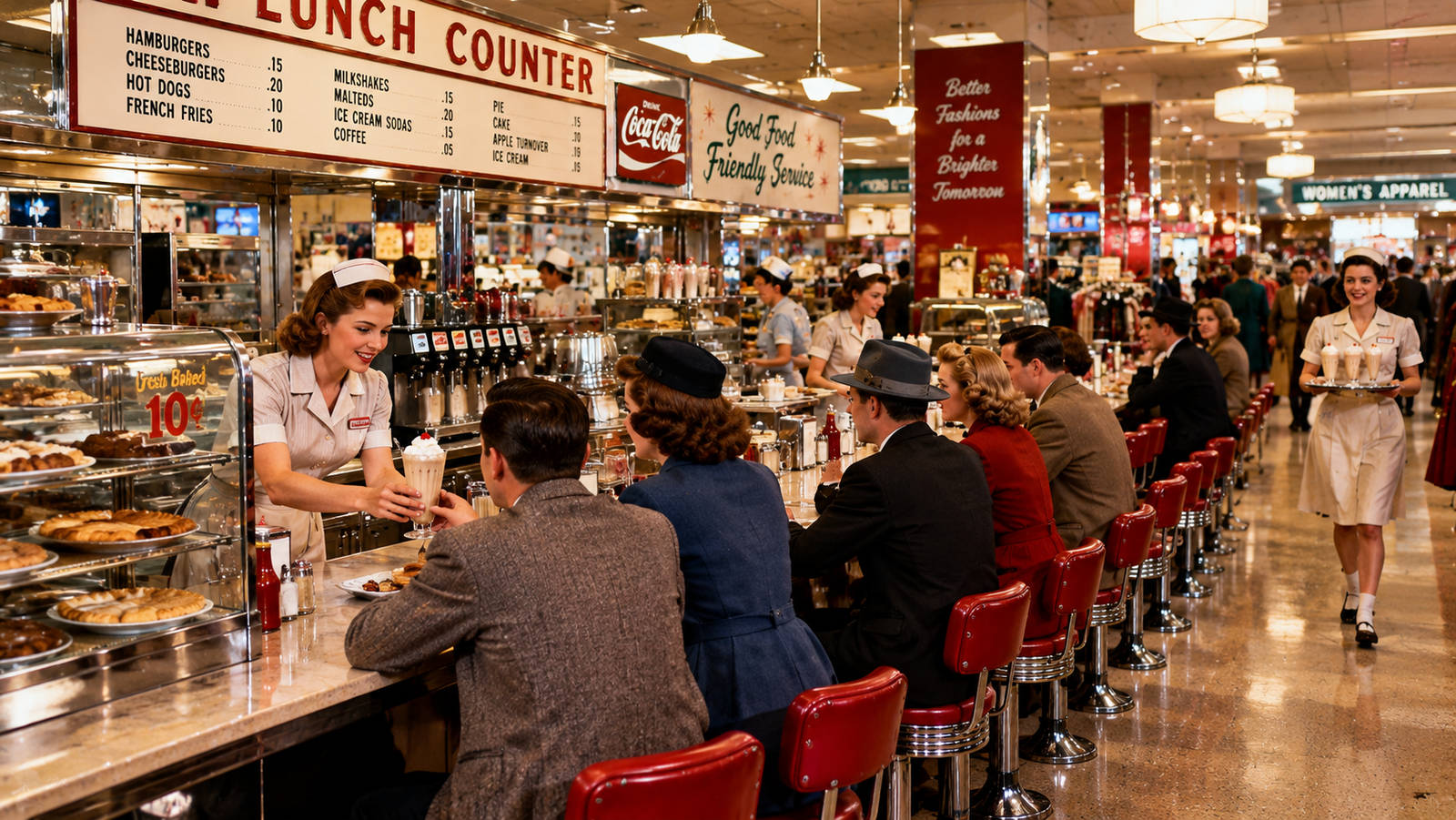
What did everyday dining look like before neon drive-thrus and mobile coffee pickup apps took over every corner of America?
Decades before corporate burger giants ruled the lunch hour, bustling lunch counters inside five-and-dime retail stores served as the social and culinary backbone of daily life.
The Evolution of American Midday Dining
Late 19th-Century Urban Shift ➔ 1920s Soda Fountain Boom ➔ Mid-Century Peak ➔ Car & Suburban Migration ➔ Fast-Food Era
| Era / Factor | Primary Dining Model | Key Cultural & Economic Drivers |
| Late 1800s – 1910s | Department store food counters | Mass migration from family farms into factory and downtown office jobs |
| 1920s – 1940s | Woolworth’s, Kress, Drugstore Luncheonettes | Prohibition dry laws, soda fountain boom, respectable dining for working women |
| 1950s – 1960s | Downtown lunch counters & chrome diners | Peak urban density, standardized affordable meals, civil rights landmark sit-ins |
| 1970s – Present | Drive-thru fast food & corporate coffee shops | Suburban corporate parks, automobile highway culture, packaged diet foods |
The Golden Era of Five-and-Dime Lunch Counters
During the early 20th century, brands like Woolworth’s, S.S. Kresge, and neighborhood pharmacies were far more than retail stores.
They introduced long, gleaming Formica countertops paired with spinning vinyl stools, giving everyday workers an ultra-fast, affordable bite during short factory and retail shifts.
The menus prioritized comforting, predictable fare:
- Comfort Food Staples: Fresh egg salad, club sandwiches, hot open-faced roast turkey, and baked beans.
- Fountain Specials: Hand-spun chocolate malteds, nickel cups of black drip coffee, and phosphate sodas.
- Speed and Access: Workers walked in, ate shoulder-to-shoulder with strangers, paid pocket change, and returned to work within 20 minutes.
How Lunch Counters Transformed Public Society for Women
Beyond affordable meals, luncheonettes served as an unexpected engine of social change for American women.
In the late 19th and early 20th centuries, unaccompanied women were barred or heavily discouraged from stepping inside male-dominated saloons and private dining clubs.
Lunch counters provided an open, daytime atmosphere of public respectability. As millions of young women entered clerical, retail, and manufacturing roles, these counters gave them a safe, welcoming place to dine solo, spend their earned wages, and socialize without social stigma.
What Caused the Sudden Extinction of the Luncheonette?
The decline of classic lunch counters was not caused by food quality, but by rapid shifts in American infrastructure and lifestyle habits:
- Suburban Flight: Downtown corporate offices relocated to sprawling suburban office parks, making walking to lunch virtually impossible.
- The Car Culture Shift: Walking down city sidewalks was replaced by highway commuting, creating the perfect conditions for drive-thru burger joints.
- Changing Work Routines: By the 1970s, office workers shifted toward bringing lighter bagged lunches, seeking health-conscious alternatives over heavy gravies and fats.
- The Rise of Malls: Enclosed suburban shopping malls replaced downtown retail districts, leaving five-and-dime institutions abandoned.
Why This History Matters & What We Lost
The loss of the classic American lunch counter represents more than just old menu nostalgia.
Sociologists often note that lunch counters provided an authentic “third place”—an informal, shared civic space where business executives, blue-collar laborers, students, and retail clerks sat elbow-to-elbow on equal footing.
Modern fast-food drive-thrus and drive-up mobile pickup lanes prioritize friction-free isolation. The demise of the lunch counter highlights the gradual disappearance of casual, face-to-face neighborhood gathering spots that tied diverse urban communities together.
Key Highlights: 5-Point Quick Summary
- Pre-Fast Food Giants: Luncheonettes and retail lunch counters served as America’s original casual dining solution before McDonald’s or Starbucks existed.
- Retail Titans: Woolworth’s, Kress, and local pharmacies built massive followings by pairing dry goods shopping with inexpensive meals.
- Social Equality: These counters broke gender barriers, creating safe, respectable public dining options for female workers.
- Urban Decline Factors: Car dependence, interstate highway expansion, and suburban office parks made walkable downtown counters obsolete.
- Loss of Community: Sitting shoulder-to-shoulder with diverse strangers offered a collective civic connection largely missing from today’s drive-thru culture.
Frequently Asked Questions (FAQ)
What was an old-fashioned American luncheonette?
A luncheonette was a compact, casual eatery typically located inside drugstores or five-and-dime retailers that served quick, budget-friendly comfort food and soda fountain drinks at a counter.
Why were Woolworth’s lunch counters so famous?
Woolworth’s revolutionized low-cost American midday dining with standardized menus across hundreds of department stores, eventually becoming a historic site for 1960 civil rights sit-in protests.
Why did American lunch counters disappear?
The rise of interstate highways, automobile car culture, suburban office parks, enclosed shopping malls, and drive-thru fast-food chains pulled diners away from downtown walkable business districts.
What Are Your Memories of Classic Counters?
Did your hometown have a classic drugstore soda fountain or five-and-dime counter? Do you think modern drive-thrus ruined the sense of neighborhood community?
Share your memories and thoughts in the comments below! If you enjoyed this nostalgic look back at American culture, please share this post across your social channels.
Read –Big Update: Best Bourbon Cocktails Recipes Guide for Home Bars.