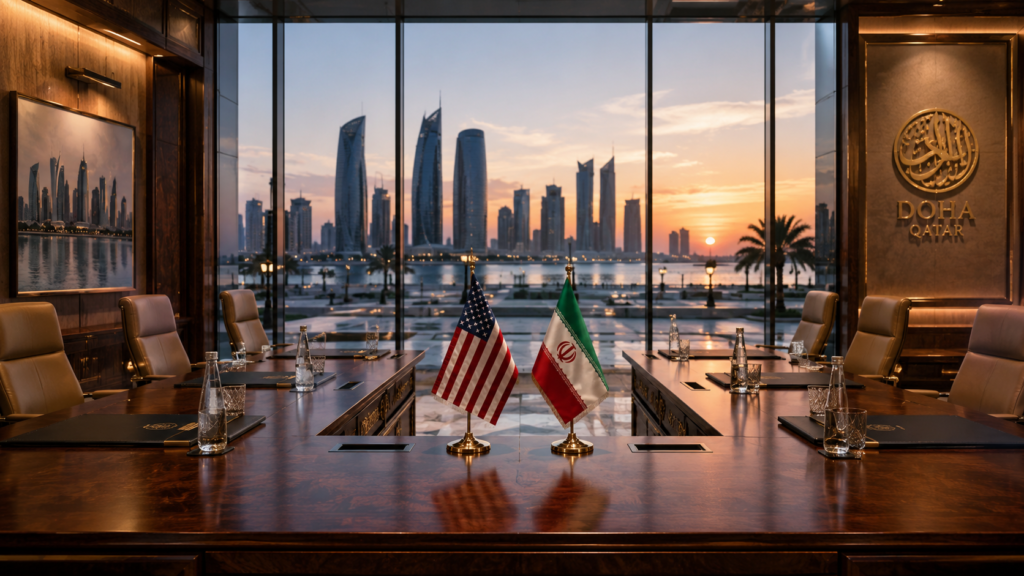
In a dramatic diplomatic breakthrough that has left the international community breathing a massive sigh of relief, the United States and Iran have officially agreed to a temporary “stand down” order. Following several days of intense, high-stakes military exchanges and precision airstrikes near the volatile Strait of Hormuz, both nations have paused active attacks to allow critical commercial shipping channels to safely resume operations.
According to official updates confirmed by senior administration officials and verified global networks including CBS News and Reuters, the two sides are now scheduled to meet on Tuesday, June 30, 2026, in Doha, Qatar, to resolve the explosive maritime dispute. The breaking news has instantly generated millions of queries on Google, completely capturing the top-trending spot across X (Twitter) and corporate financial circles.
The Breakdown: Inside the Precarious Truce
The sudden diplomatic pivot comes less than 24 hours after the conflict threatened to spiral into an all-out regional war. Following heavy U.S. CENTCOM airstrikes against Iranian drone and radar facilities, Tehran had initially responded with retaliatory drone attacks targeting Western interests near Bahrain and Kuwait, even threatening a complete halt to all future peace negotiations.
However, backchannel diplomatic efforts mediated by Oman and Qatar have successfully stabilized the immediate threat corridor:
- The Stand Down Order: A U.S. official confirmed that both American naval assets and Iranian forces have agreed to cease direct tactical engagements effectively immediately.
- Strait of Hormuz Reopens: Commercial oil tankers and maritime transport vessels will be allowed to navigate freely through the strategic waterway under international security frameworks.
- The $6 Billion Factor: Adding momentum to the ceasefire, Iranian President Masoud Pezeshkian announced through state media that $6 billion in frozen Iranian assets currently held in Qatar are set to be officially unfrozen and returned to Tehran as part of the original memorandum of understanding.
⚠️ A Fragile Agreement: Rising Complexities
While the upcoming Doha summit offers a clear path toward peace, the geopolitical situation remains incredibly complex and fragile. Senior Washington officials have issued stern warnings that any further hostile actions or proxy interventions from Iranian assets will result in immediate, overwhelming military retaliation.
Furthermore, regional dynamics remain tense as Iran continues to push for a complete Israeli military withdrawal from Southern Lebanon as a core condition for a long-term, broader peace treaty—a framework that is currently meeting fierce resistance from various regional leaders. For now, all eyes are locked onto Qatar as diplomatic technical teams prepare for Tuesday’s crucial negotiations.
🙋♂️ Frequently Asked Questions (FAQs)
Q1: Did the US and Iran agree to a ceasefire today?
Yes. Both the United States and Iran have agreed to “stand down” and pause ongoing military exchanges near the Strait of Hormuz, allowing commercial vessels to safely resume shipping operations.
Q2: When and where are the US-Iran peace talks taking place?
Official diplomatic delegations from both Washington and Tehran are scheduled to meet for emergency peace talks on Tuesday, June 30, 2026, in Doha, Qatar.
Q3: What happened to the frozen Iranian assets in Qatar?
Iranian President Masoud Pezeshkian confirmed that $6 billion of frozen Iranian financial assets held in Qatari banks will be unfrozen and returned to Iran as part of the ongoing peace negotiations framework.