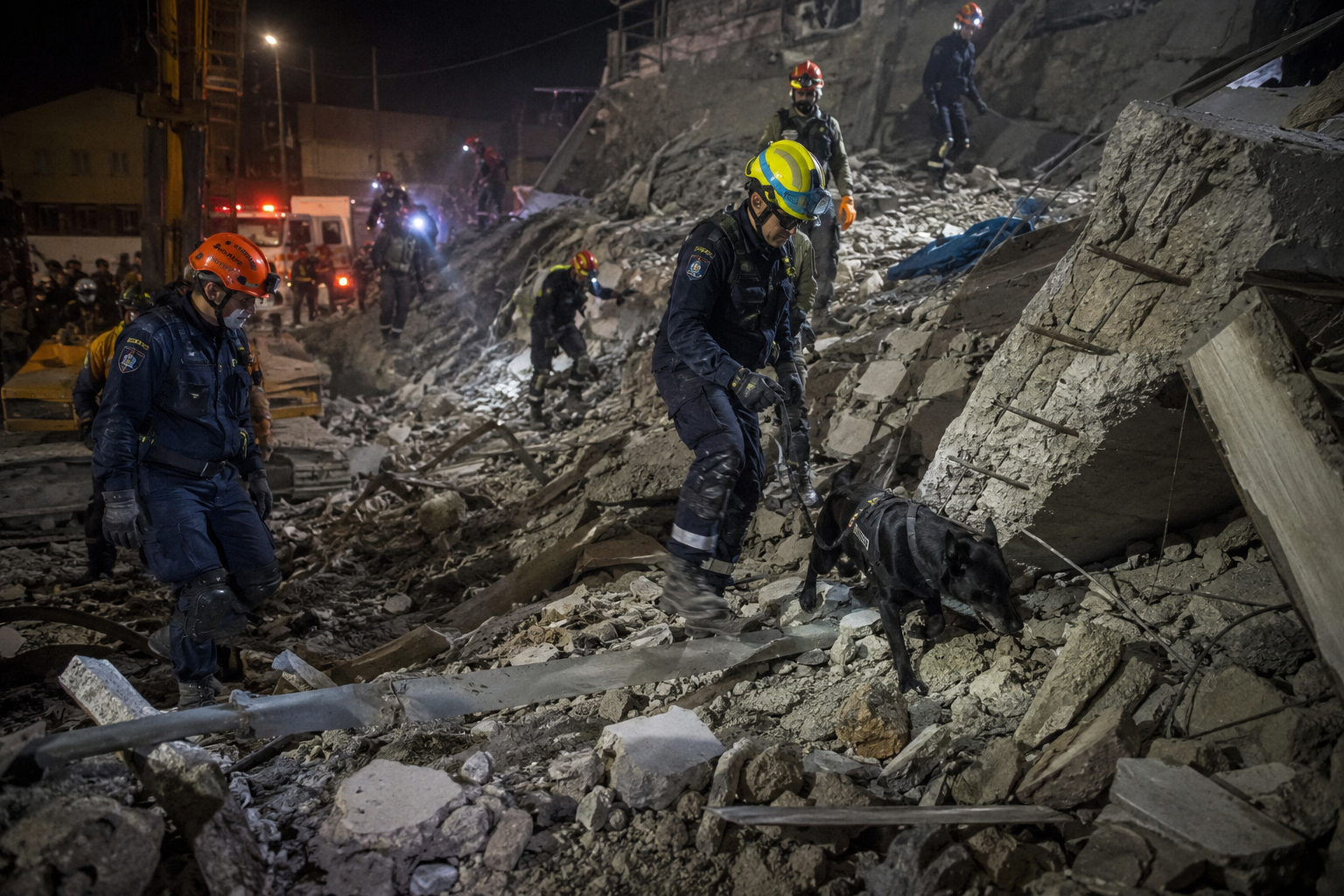
Venezuela has declared a national state of emergency after being rocked by two catastrophic, back-to-back earthquakes measuring magnitudes of 7.2 and 7.5. The powerful twin quakes, which struck on the evening of June 24, 2026, have caused widespread devastation across the capital city of Caracas and northern regions. According to initial official reports, the disaster has claimed at least 235 lives and left close to 1,000 people injured, with numbers expected to rise sharply as search and rescue operations continue through the rubble of collapsed buildings.
The United States Geological Survey (USGS) confirmed that the epicenters originated in Yaracuy state, west of Caracas, at shallow depths of 22km and 10km respectively. The tremors were so severe that the shaking was felt across central and western Venezuela, extending into neighboring Colombia and parts of Brazil’s Amazon region. In response to the crisis, Venezuelan authorities have suspended school classes, closed the main airport in Caracas, and mobilized all available medical personnel to report immediately to hospitals to treat the overwhelming influx of casualties.
In an unprecedented geopolitical development, global rivals including the United States, Iran, and Cuba have put aside political differences to commit immediate humanitarian assistance. US Secretary of State Marco Rubio announced a comprehensive “whole-of-government” response, noting that the US military would provide heavy logistical support. Meanwhile, Cuban medical teams already on the ground were immediately mobilized, and Iran’s foreign ministry expressed official solidarity, declaring full readiness to deploy specialized relief and rescue teams.
International aid groups warn that the disaster will severely compound the ongoing humanitarian challenges in Venezuela, where nearly 28% of the population was already in urgent need of basic assistance. United Nations Humanitarian Chief Tom Fletcher confirmed that international rescue teams, including canine squads and emergency workers from European nations like the Netherlands, Spain, France, and Germany, are currently en route. Humanitarian organizations are urgently calling on international donors to step up funding, emphasizing that immediate logistical and financial support is critical to saving lives in the coming days.